About Flemington & its history
History of Flemington – Australia's most historic racecourse
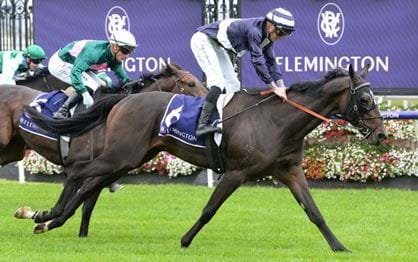
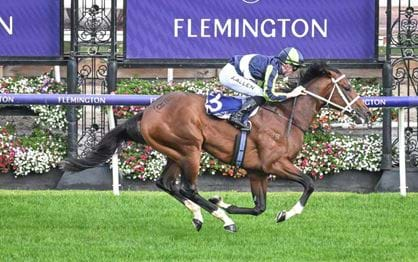
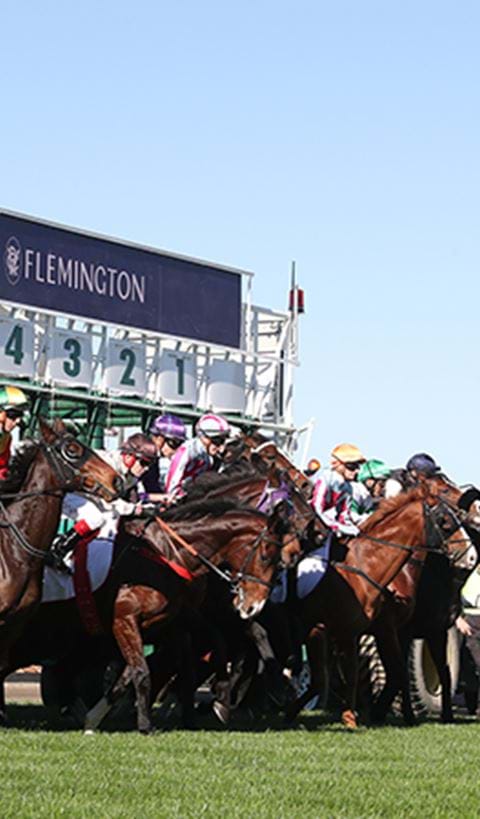
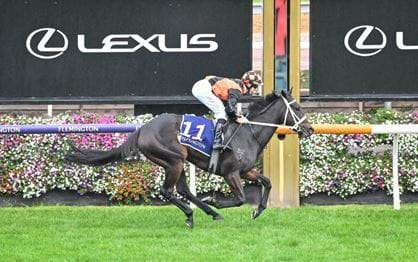
Flemington is the best-known racecourse in Australia.
It is the oldest continuing metropolitan racecourse with races run here every year since 1840.
It is the most significant racing heritage site in the country and in 2006, was placed on the National Heritage List.
The first racemeeting was held on the rough river flats beside the Maribyrnong River in March 1840 when the town of Melbourne was barely five years old. This was just two years after Melbourne's first racemeeting, near present-day Spencer Street railway station (March 1838).
Flemington is also a great centre for horse training. Many of Australia's most famous trainers have maintained stables at or near the course.
Following the 2006 Melbourne Cup Carnival, the Course Proper was ripped up and replaced for the first time in the course's history. Racing was suspended at Flemington until September 2007.
The Victoria Racing Club
The Victoria Racing Club (VRC) (1864) evolved from two earlier rival clubs, the Victoria Turf Club (1852) and Victoria Jockey Club (1857), who disbanded to create the new club. They had previously run their own separate racemeetings at the racecourse.
Before the Victoria Turf Club began, self-appointed committees of interested horse owners had organised the annual races. From 1864 until the end of 2001, the VRC acted as the principal authority responsible for the conduct of racing in Victoria. Racing Victoria Ltd now fulfils that role.
In August 2006, the VRC was incorporated to become Victoria Racing Club Limited.
The origins of the Melbourne Cup and the Spring Racing Carnival
The first Melbourne races were run annually in the autumn.
In 1854, the Victoria Turf Club (VTC) decided to run a spring meeting as well, when the countryside was at its best and the weather the most dramatic. The VTC conceived the idea of the Melbourne Cup, a handicap race over two miles with a rich prize. This was first run in November 1861 and attracted top inter-colonial horses, including the winner, Archer, from New South Wales. For a full history of the Melbourne Cup, please refer to About The Melbourne Cup.
The newly formed Victoria Racing Club (VRC) took over the race in time for its fourth running, in 1864, and has run it at Flemington every spring since that time.
How Flemington Racecourse began
When Flemington (originally called Melbourne Racecourse) was first used as a racecourse in March 1840, it was regarded by the government as Crown Land and was not privately owned.
In 1848, the Governor of New South Wales was still in charge of the Port Phillip District which became the separate colony of Victoria in 1851. He formally ordered that a site of 352 acres be considered as a public racecourse, and he appointed six men as trustees of the racecourse area. In 1871, the government passed a Victoria Racing Club Act which made the club the trustees of the racecourse.
The naming of Flemington
Flemington was first known as the Melbourne Racecourse. The original approach road from Melbourne crossed Moonee Ponds Creek at Mt Alexander Road and passed through a property owned by James Watson. He named the property Flemington after his wife Elizabeth's hometown – Flemington in Morayshire, Scotland. He built the Flemington Hotel there in 1848 and a small township grew up around it. The course was not therefore, as long thought, named after early settler Robert Fleming, whose home was in Brunswick. The name Flemington was commonly used for the racecourse by the late 1850s.
The Flemington tradition
Flemington became a marvel under the early administration of the VRC. First secretary Robert C. Bagot and his successor Henry Byron Moore improved all facets of the racecourse – for horses, trainers and the public – to make Flemington a premier sporting and recreation centre.
Melbourne's great wealth and growth from the gold rush era of the 1850s to the land boom of the 1880s made the city the most dynamic in Australia. The Melbourne Cup rose to fame as a social and fashion event as well as the national sporting highlight of the year.
Flemington was attracting crowds estimated at 100,000 for Cup Day in its first few decades. The Cup was always the most popular race of the year until a new trend emerged in 2001. In that year, both the Derby Day and Oaks Day attendances outstripped Cup Day as the popularity of Melbourne Cup Carnival exploded. When Makybe Diva won the first of her three Cups in 2003, the official attendance was a record 122,736 but that figure has since been surpassed by the Derby Day crowd of 129,089 in 2006. In 2007, the VRC introduced a new ticketing strategy which would cap attendance figures at 120,000 to avoid overcrowding.
Melbourne Cup Day on the first Tuesday in November has been a public holiday for the city since the mid-1870s, and is celebrated as a special day around the country.
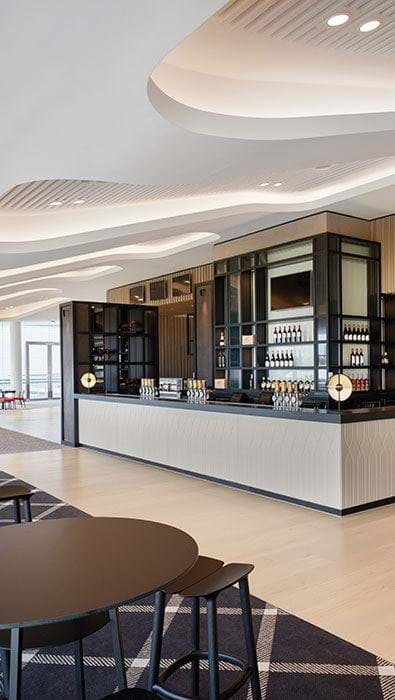
The VRC has constantly improved standards of comfort and accommodation at Flemington, with $26.2 million spent on improvements in the years 2000-2004, in addition to the $45 million grandstand completed in 2000.